How it works
Bailey gives no way to calculate a person's rays. In Esoteric Psychology I she treats arriving at an understanding of one's five rays as a work of self-knowledge, and in Esoteric Astrology she writes that an astrologer cannot speak with confidence about a chart until sure of the two major rays, the soul's and the personality's. The schools that teach her system today find rays by guided self-assessment and observation over time, not by arithmetic.
EsoTerrier therefore shows two things side by side and never lets one stand in for the other.
What the birth chart indicates. Bailey gives every sign of the zodiac one to three rays (Aries 1 and 7, Taurus 4, Gemini 2, and so on through Pisces 2 and 6) and every planet one ray, seven of them sacred and five not. She also gives each sign three sets of ruling planets: orthodox, esoteric and hierarchical. We apply her tables to the true positions in your chart, computed from an astronomical ephemeris rather than fixed date ranges, which give the wrong Sun sign on hundreds of days between 1900 and 2030. With a known birth time and place you see the Sun sign, the rising sign and the ten planets; without a time, each body is shown across the day and there is no rising sign. Bailey links the Sun sign and its orthodox rulers to the personality and the rising sign and its esoteric rulers to the soul's purpose, as energies acting on a person. Everything in this part is labelled an indication.
The rays you confirm. The questionnaire is EsoTerrier's own: seventy statements, written from the qualities Bailey gives each ray and modelled on no one else's instrument. It suggests a ray for each of the five levels and says how clear the lead is; you then confirm or change each one, and say how sure you are. For the mind, the emotions and the body it asks about the rays Bailey says normally govern them: the mind on the first, fourth or fifth ray, the emotions on the second or sixth, the physical body on the third or seventh. You can still choose another ray, and it is marked as the exception Bailey allows, which she says appears sometimes on the path of discipleship.
The result is written as Bailey wrote her students' rays, in a fixed order: soul, personality, mind, emotions, body, for example 2-7-5-6-3. We do not offer the ray of the monad, which she says matters only at a late stage of development. Each ray opens to Bailey's own three short lists for it, its special virtues, its vices and the virtues to be acquired, credited to her book and page. The colours in the chart only help to tell the rays apart, and the numeral is always shown beside them.
Origins and history
The image is old; the doctrine is from the 1880s; the five personal rays are from the 1930s and 1940s.
| When | Who | What happened |
|---|---|---|
| Second millennium BC | The poets of the Rigveda | Hymns speak of the sun's seven rays and of a chariot drawn by seven horses. An image, not a doctrine. |
| 1875 | Blavatsky, Olcott and others, New York | The Theosophical Society is founded; "the seven rays" enter its vocabulary over the next decade. |
| 1880s | T. Subba Row, Madras | Writes of seven classes of adepts corresponding to seven rays, and that belonging to a ray says nothing about a person's moral or mental qualities. The earliest assignment of people to rays we have found. |
| About 1885 (his account) | C. W. Leadbeater | Says a Master gave him a table of the rays at Adyar; he printed it in 1925 and called it partial and misleading. |
| 1888 | H. P. Blavatsky, The Secret Doctrine | Seven groups of cosmic beings, "the primeval seven Rays", emanate from and return to the source; she reads a Vedic verse on seven "rays of wisdom" as seven paths. A cosmology, not yet a psychology. |
| 1919 to 1920 | Alice Bailey at Krotona, California | By her account a voice she called the Tibetan asks her to write books in November 1919. She and her husband leave the Theosophical Society around 1920, after its leaders question her claims. |
| 1922 | Alice and Foster Bailey, New York | Initiation, Human and Solar and Letters on Occult Meditation: the three major and four minor rays, a Master named on most of them, and colours for the rays that she says are mostly blinds. The Lucis Trust grows out of their publishing company. |
| 1925 | Ernest Wood; Leadbeater; Bailey | Wood's The Seven Rays, the first book of the rays as seven human types; Leadbeater's chapter on the rays and their heads; Bailey's Treatise on Cosmic Fire tabulates the planets' rays. |
| 1936 | Bailey, Esoteric Psychology I | The rays named and described; the rays that condition a person; three lists per ray, which she calls "necessarily imperfect". |
| 1942 | Bailey, Esoteric Psychology II | The rule for the three bodies, with exceptions. |
| 1944 and 1955 | Bailey, Discipleship in the New Age | Named students are given five rays in a fixed order: the form every school uses now. |
| 1951 and 1960 | Posthumous volumes | Esoteric Astrology: the rays of the signs and planets and the three sets of rulers. The Rays and the Initiations: a word of power for each ray. |
| 1952 to 1988 | Hodson, Cedercrans, Creme, Robbins | An Adyar typology (1952); parallel lesson series; Creme's lists of the rays of historical figures; the Seven Ray Institute (1985) and its questionnaire. |
| 2026 | EsoTerrier | The system rebuilt from Bailey's tables and a questionnaire of our own, after our earlier method was found to have no source. |
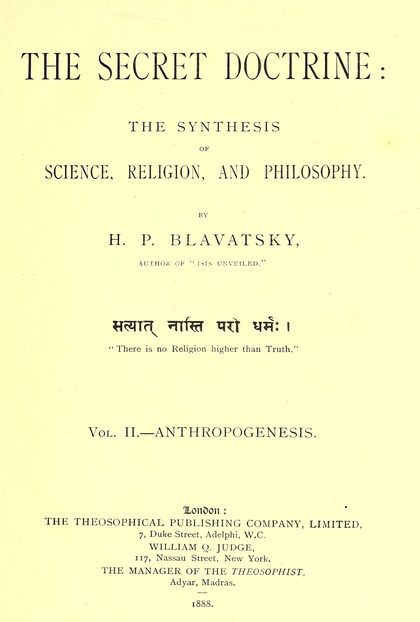
Bailey's own story is that the books came from "the Tibetan", Djwhal Khul, whom she said she heard and took down; that is her account, and scholars treat it as a religious claim. What is not in doubt is the order in which the ideas appeared: the Theosophists had the rays first, as cosmic powers and then as one ray per person, and Bailey turned them into a five-part psychology with an astrology attached.
The seven rays
Each ray has its own page: Bailey's name for it, the signs and planets she gives it, her three lists in our paraphrase, how older Theosophy saw it and the claims made about it.
Rays of aspect
Variants and what we leave out
Several methods and lists circulate under the name of the rays. We describe them so you can recognise them, and say why we do not use them.
- Numerology (our own, retired). Until 11 October 2026 our engine took the rays from the birth date and the letters of the name. No Bailey book and no ray school does this; the mapping put most body rays outside her rule. It was removed.
- Clock and weekday tables. Anonymous tables read six rays from the weekday and hour of birth converted to New York time. They have no author and no source, and they disagree with every other method.
- Ray percentages. Some astrology software scores a chart's rays as percentages. Its own documentation says a true ray chart cannot be found objectively; we show counts of planets at most, never a "dominant" ray.
- The Seven Ray Institute's questionnaire is the serious one: long, and recording the person's own confidence. It is the institute's own instrument, and we neither read nor copied its items; our seventy statements are our own.
- Theosophical single-ray types. Subba Row, Wood and Hodson gave each person one ray. Bailey's five personal rays replace them here; Wood's type for each ray appears on its page, credited to him.
- The Ascended Master teachings (the I AM Activity and the Summit Lighthouse) give the rays different colours, different heads, chakras and days. A separate, later stream: we name it only to tell it apart.
- Colours. Besant's, Bailey's, the Seven Ray Institute's and the Ascended Master lists all differ, and Bailey withheld two of her own. We use colour only as a cue beside the numeral.
- The monad, sub-rays, veiled planets and Vulcan. The monad's ray and sub-rays are not offered. Where Bailey says the Sun or Moon veils another planet, we show a note and substitute nothing; Vulcan, a hypothetical planet, is named as a ruler without a position.
- Rays of nations and cycles. Bailey also gives rays to nations, kingdoms of nature and periods of time. Out of scope here.
Myths and disputed claims
What is said about the rays, who says it, and what the record shows. The label is ours.
-
The birth chart decides a person's rays: the rising sign gives the soul ray and the Sun sign the personality ray.
falseWho says it: Some ray calculators and loose readings of Esoteric Astrology.
What the record shows: Bailey links the Sun sign to the personality and the rising sign to the soul's purpose as energies acting on a person, and says the astrologer must already know the two major rays before reading a chart (EA pp. 512 to 513).
-
Bailey's books were dictated to her telepathically by a Tibetan master, Djwhal Khul.
unverifiedWho says it: Bailey herself and the Lucis Trust.
What the record shows: Her own account, and a religious claim that scholars treat as such. Annie Besant doubted it in Bailey's lifetime. The books are registered with Bailey as their author.
-
The Vedic hymns' seven rays of the sun are the earliest record of the Seven Rays teaching.
unverifiedWho says it: Theosophists from Blavatsky on.
What the record shows: The Vedic phrases are real (Rigveda 1.50.8 to 9, 1.105.9, 8.61.16). Reading them as Bailey's doctrine is a Theosophical interpretation of older texts.
-
The five personal rays (soul, personality, mind, emotions, body) are an ancient teaching.
falseWho says it: Popular ray sites and apps.
What the record shows: The five-ray formula is Bailey's, published between 1936 and 1955. The Theosophists before her gave one ray per person.
-
Bailey was the first to develop the idea of the seven rays.
disputedWho says it: A 1980 history of Theosophy, the Seven Ray Institute and Lucis Trust literature.
What the record shows: Subba Row assigned people to rays in the 1880s, Leadbeater kept a table said to date from about 1885, and Wood's book of seven ray types appeared in 1925. Bailey's treatise is the fullest development.
-
Bailey was expelled from the Theosophical Society in 1920.
disputedWho says it: Popular biographies and some histories.
What the record shows: The accounts agree that the Baileys lost their positions at Krotona and left the Society around 1920 after its leaders questioned her claims. Whether that was an expulsion differs between tellers.
-
Any ray can govern an ordinary person's mind, emotions or body.
falseWho says it: Clock-and-weekday ray tables, quizzes, and our own engine before October 2026.
What the record shows: Bailey's rule (EP II p. 288) gives the mind rays 1, 4 or 5, the emotions 2 or 6 and the body 3 or 7, with exceptions she says appear sometimes among disciples.
-
Bailey's rule for the three bodies has no exceptions.
disputedWho says it: Simplified ray courses and apps.
What the record shows: She states exceptions herself, and her own example chart (EP II p. 295) has a second-ray body against her rule.
-
Belonging to a ray fixes a person's virtues and vices.
disputedWho says it: Readings of Bailey's table of virtues and vices.
What the record shows: Subba Row wrote in the 1880s that a ray implies no particular moral or mental quality, and Bailey called her own table "necessarily imperfect" (EP I p. 201).
-
Each ray has one agreed colour, handed down by the tradition.
disputedWho says it: Most ray websites and charts, and our own chart before October 2026.
What the record shows: Bailey said most of her colour names were meant to blind and withheld two of them; the published colour lists disagree with one another. Any palette is a convention.
-
A quiz can tell you your ray.
unverifiedWho says it: Single-result ray quizzes.
What the record shows: Bailey gives five rays per person and says they emerge with development; the Seven Ray Institute's founder wrote that there is probably no way yet to confirm a ray opinion.
-
A person's rays can be computed from numerology.
falseWho says it: EsoTerrier's own engine and pages before 11 October 2026.
What the record shows: Our own invention, with no source in Bailey or any ray school. It put most body rays outside her rule and was removed.
Stories and lore
These are told as the tradition tells them.
The stranger in the turban. Bailey wrote that in 1895, when she was fifteen, a stranger in European clothes and a turban walked into the room where she was sitting, told her she had work to do for the world, and left; years later she identified him as the Master Koot Hoomi. In November 1919, walking in the hills near Krotona, she said she heard a voice asking her to write books, which she at first refused.
A Master's table. Wood tells that Leadbeater one day handed him a table of the rays, given to Leadbeater some forty years earlier, he said, by a very advanced occultist; Leadbeater printed it too and warned that it was partial and misleading. In Leadbeater's telling the giver was the Master Djwal Kul, the same name, spelt Djwhal Khul, that Bailey gave her Tibetan.
The two hidden classes. Subba Row wrote that two of the seven classes of adepts are so rare that one or two of them appear only every few thousand years, and that the other five are always represented on earth.
The Lord of the World from Venus. Theosophy and Bailey teach that a being named Sanat Kumara came to Earth from Venus with helpers, long ago, bringing the energies that woke the human mind. Bailey glosses Venus as a "chain" of her cosmology. A teaching, not a history.
The masters of the rays. In Bailey's 1922 book the three major rays have heads, and named Masters stand on most of the rays; Leadbeater's list differs on the third. The Ascended Master teachings rearrange both. Each ray page gives Bailey's line, as her teaching.
Evidence and criticism
No test of the rays exists. We know of no study that checks whether assessed rays or chart indications predict anything, and the tradition itself says rays cannot be confirmed: Michael Robbins, who founded the Seven Ray Institute, wrote that many of Bailey's own students mistook their rays and that there is probably no way yet to confirm a ray opinion. The institute's questionnaire records how sure the person is.
The methods do not agree. For the same test person our old numerology and the clock tables agreed on no level; a site that runs a chart method beside the clock tables reported that none of its five layers matched. Only the shared tables, the rays of the signs and planets, can be checked, and those match Bailey everywhere.
Bailey is not always consistent. Her table of rulers differs from her own text in one chapter, her example chart breaks her rule for the bodies, her names for the rays vary between books, and she calls her table of virtues imperfect and most of her colour names blinds.
The tradition argued about types. Subba Row denied that a ray implies any moral quality; Wood and Hodson built types on exactly that; Bailey's lists do too, with her caveat. Wood also warned against wishing one's ray to be this or that.
How scholars place her. The historian of religion Olav Hammer calls Theosophy's reading of older religions as its forerunners a "construction of tradition"; Wouter Hanegraaff treats the channelled Masters as religious claims and places Bailey among the sources of New Age thought; others call her a post-Theosophical writer and credit her with developing an idea that existed before her in germ.
Racism and antisemitism. Scholars have criticised racist and antisemitic passages in Bailey's writings, among them a section of Esoteric Psychology I on what she called the Jewish problem; her defenders answer that her aim was the unity of humanity. EsoTerrier uses nothing from those parts of her work.
Copyright. The Lucis Trust states that it holds the copyright of all of Bailey's books. The 1922 and 1925 books, and Esoteric Psychology I, whose copyright was not renewed, are in the public domain in the United States; her later books are still protected there, and all of them are in the public domain in the United Kingdom. So we give her tables as facts with book and page, quote only short items from public-domain books, and write everything else in our own words.
Terms
- Ray
- In Bailey's teaching, one of seven qualities of energy that condition everything that lives. Numbered 1 to 7 and named, never identified by a colour.
- Rays of aspect and of attribute
- Bailey's two groups: rays 1 to 3 are the rays of aspect, rays 4 to 7 the rays of attribute.
- Lines of force
- Bailey pairs the odd rays (1, 3, 5, 7) and the even rays (2, 4, 6) as two lines of energy.
- Soul ray
- The ray of the soul, which Bailey also calls the egoic ray. It may be any of the seven.
- Personality ray
- The ray of the personality, which in her teaching integrates the mind, the emotions and the body; it is not a sixth body. It may be any of the seven.
- The usual rays of the bodies
- Our name for Bailey's rule that the mind is normally on ray 1, 4 or 5, the emotions on 2 or 6 and the physical body on 3 or 7. Another ray is shown as a labelled exception.
- Ray formula
- A person's five rays written in Bailey's order, for example 2-7-5-6-3. The list form is hers; the name is the Seven Ray Institute's.
- Indications
- Our word for what a birth chart shows by Bailey's tables: the rays acting through the Sun sign, the rising sign and the planets. Never a person's own rays.
- Orthodox, esoteric and hierarchical rulers
- Bailey's three sets of ruling planets for each sign (Esoteric Astrology, Tabulations IV to VI). She calls some planets sacred and others non-sacred.
- Word of power
- Bailey's phrase for seven short sentences in The Rays and the Initiations (pp. 515 to 518), one per ray, meant for a stage of inner work. Not a motto or keynote; we cite them by page and do not quote them.
- Keynote
- Bailey's one-word keynotes of the rays (Esoteric Astrology, p. 602), such as Initiation for the first ray and Unification for the second.
- Glamour
- Bailey's word for a ray's illusions of feeling, a separate list in her book Glamour; not the same as the vices in her table.