How it works
A BaZi chart sets out four pillars for the year, month, day and hour of birth, each a stem and a branch. The luck pillars are not a fifth pillar of the birth; they are a sequence that grows out of the month pillar, ten years at a time, and the tradition reads them only after it has read the natal chart. The 三命通會 opens its chapter on luck by saying that the chart is settled first, and the luck examined after.
The direction. The sequence runs forward or backward through the cycle of sixty. The 三命通會 gives the rule in one sentence: 「陽男陰女,大運以生日後未來節氣日時為數,順而行之;陰男陽女,大運以生日前過去節氣日時為數,逆而行之」, in our words: for a yang man or a yin woman, count to the coming solar term and go forward; for a yin man or a yang woman, count back to the term just past and go backward. Yang and yin here are the polarity of the birth year's stem, so a man born in a 甲 year runs forward and a woman born in the same year runs backward. The rule is written for men and women only. EsoTerrier calls the input "chart gender", states the rule on every chart, and shows the other direction beside it; a person with neither recorded chooses one.
The start. The first pillar does not begin at birth. The interval from the birth to the next 節 term (going forward) or the previous one (going backward) is measured, and every three days of it count as one year of luck. The 三命通會 works an example: five days and three double hours make 63 double hours, each worth ten days of life, so 630 days, "one year and nine months". The same ratio, spelt out, is one day of interval for four months and one double hour (two clock hours) for ten days. We apply it continuously from the birth instant: 4,320 minutes of interval for a year, 360 for a month and 12 for a day, cutting off the remainder rather than rounding, and we print the start in years, months and days with the date of the first hand-over (交運). For the synthetic person our tests use, that is 7 years 4 months, with the hand-over on 28 October 1997. Only the twelve 節 terms count, the ones that open the BaZi months (立春, 驚蟄, 清明 and so on); the twelve mid-month terms do not.
The pillars. Each pillar is the month pillar stepped one more place: a woman born in the 乙丑 month of a yang year walks 甲子, 癸亥, 壬戌 and on, as Figure 1 shows. The sequence has no natural end; we print eight, as most English tools do. For each pillar the chart gives its real age range and hand-over dates, its stem and branch, the Ten God of its stem against the day master, the hidden stems of its branch with their Ten Gods, its Na Yin, the day master's stage on its branch, whether it is void, and the combinations and clashes it forms with the natal pillars. The texts weigh a luck pillar mostly by its branch: the 淵海子平 says 「大運看支,歲君看干」, the luck is read by its branch and the year by its stem.
The annual pillars. Inside each luck pillar, every year has its own stem and branch from its 立春, not from the lunar new year, with the same details; they are grouped under the luck pillar in force. Before the first hand-over, the chart shows a childhood column with the month pillar, labelled as the modern habit it is. "Now" is decided by the hand-over dates, not by whole years of age.
What changes it and what does not. The pillars step from the month pillar and the start is counted between two instants, the birth and the term, so the midnight convention for the day pillar and the true-solar-time correction change neither; the solar-time correction can only shift the printed hand-over time by its minutes. Without a birth time the start is counted from noon and can be off by up to about two months of luck.
What we do not compute. The tradition judges a decade by what it does to the day master's strength and to the useful god: the 三命通會 lists rules such as 「官欲運生」, the officer wants a luck that produces it, and the 淵海子平 says a strong day master should walk a weakening luck and a weak one a strengthening luck. EsoTerrier computes neither strength nor the useful god, by the owner's decision, so the chart names each decade by its Ten God and its relations and stops there. A Wealth pillar is named for what the day master controls; it is not a forecast about money, and no pillar here is called good or bad.
Origins and history
The calendar the pillars count by is Han; the ten-year step is Song; the full rule with a worked example is Ming.
| When | Who | What happened |
|---|---|---|
| 104 BC | The 太初曆 calendar | All twenty-four solar terms enter the official calendar; the twelve 節 terms later bound the BaZi months and anchor the count. |
| Died 813 | Li Xuzhong | Reads fate from the year, month and day of birth, according to Han Yu's epitaph for him; no ten-year periods are mentioned. |
| Late Northern Song (circulating 1119 to 1130) | The 珞琭子三命消息賦 | 「運行則一辰十載」, the luck moves one branch in ten years, and 「男迎女送」, men go to meet and women see off: the decade step and a direction by sex. |
| Song material, Ming printing | 徐大升; 楊淙 | The 淵海子平's chapter on luck reads the luck by its branch, likens the hand-over to grafting, and ends its own list of decades with the warning that it is 「死法譬喻」, a fixed rule given only as illustration. |
| Ming, Wanli era | 萬民英 (Wan Minying) | The 三命通會: the direction rule, the count of three days for a year with its worked example, two rules for the minor luck of childhood, and the chapter that reads the year with the luck. |
| 1524 | The Ming Bureau of Astronomy | The official calendar prints each 節 and 中 term to the double hour and the quarter (Figure 2). |
| 1645 | The 時憲曆 calendar | The solar terms move from the mean Sun to the true Sun, every 15 degrees of its path: the instants modern tools count to. |
| Qing, after 1820 | 任鐵樵 | His commentary on the 滴天髓 reads case charts decade by decade, his own among them. |
| Joseon; Edo to the 20th century | Korea; Japan | The ten-year luck (대운) in Korean Saju and in Japanese 四柱推命, where schools differ on how the first period is counted. |
| 1914 to 1949 | China's standard time | Clock time parts from sun time; the hour pillar, though not the luck pillars, becomes sensitive to the choice of clock. |
| 1946 | Chao Wei-pang | The first scholarly English account of Chinese fate calculation. |
| 1978 to 2000 | 梁湘潤, Taipei | Books on the annual pillars that shaped the Taiwanese teaching line. |
| 2010 on | English teaching | The English Ten God names applied to decades, as in Joey Yap's books. |
| 2024 and 2025 | Open libraries and calculators | Two start conventions in lunar-javascript, hand-over dates printed online, four start settings at yisuan. |
| 2026 | EsoTerrier | The service rebuilt to count from instants, after our first version got the start wrong for 59 of 70 test births. |
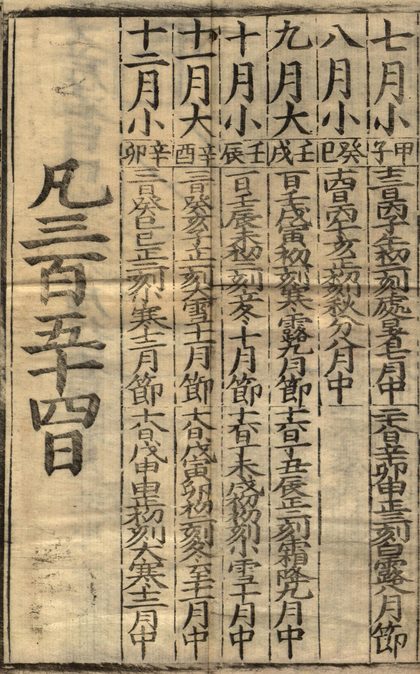
The texts are older than any of the names used for them in English. The Song lines on the decade step survive only as the 淵海子平 reprints them, and the Song commentaries on the same poem have not been read in full; whether they already state the three-day count, which would date it to the Song rather than the Ming, is open.
The ten gods
A luck pillar is named by the Ten God of its stem: a Direct Officer pillar, a Friend pillar. The Ten Gods are the ten relations a stem can have to the day master, five by element (the same element, what it produces, what it controls, what controls it, what produces it), each in the same or the other polarity. Each has its own page: the name and its other names, the stem it is for each day master, what the classical texts say about it, how a decade under it is traditionally read, and the claims made about it.
Companions (比劫): the same element as the day master
Output (食傷): what the day master produces
Wealth (財): what the day master controls
Power (官殺): what controls the day master
Resource (印): what produces the day master
Two notes on names. 比肩 is "Friend" here, the name most English sources use; our earlier pages called it "Companion", and the old address now leads to the Friend page. Companions (比劫) remains the name of the family that holds Friend and Rob Wealth. And English Wikipedia's table has the polarity of three pairs the wrong way round: in the classical rule a Direct Wealth, Direct Officer or Direct Resource stem has the polarity opposite to the day master's.
Variants and what we leave out
The method is classical; the counting and the display are not agreed. We describe the variants so you can recognise them.
- Counting the start. The 三命通會 counts in double hours and keeps years and months. Hand methods count whole days and round to the nearest year, or by a remainder rule. Chinese software keeps years, months and days and prints the hand-over date. lunar-javascript offers whole days plus double hours, or 4,320 minutes a year. We use the continuous rule from the instant and print the date.
- Which instant. Some tools compare the birth date with the term's date, ignoring the hours; our first engine did, and was ten years out for a birth on a term day. Others, and we, compare the two instants.
- Ages. Chinese tools print nominal age (虛歲), one at birth; others print real age; some print a calendar year with a rounding caveat. We print real age and calendar years.
- Before the first pillar. The 三命通會 records two rules for a minor luck (小運) in childhood: an old fixed start, men from 丙寅 forward and women from 壬申 backward, and a count from the hour pillar, one pillar a year, which its author says he tried often and uses alone for childhood. Modern tools show nothing, the month pillar, or the hour-pillar count. We show the month pillar, labelled.
- How many pillars. Eight in most English tools, nine or ten in some Chinese ones. We print eight.
- Japan and Korea. Japanese schools differ on how the first period is counted, and Korean practice has its own start rule; we know both only from encyclopedia summaries and offer neither.
- Gender. Every tool surveyed offers male and female only, and no published rule covers anyone else. We name the input chart gender, explain the rule, and show both directions.
- Reading styles we do not take. Decades labelled by family as seasons to act in, the useful god as the key to judging a decade, the monthly pillars, the minor luck, and every modern author's decade texts, which are in copyright and cited for facts only.
Myths and disputed claims
What is said about the luck pillars, who says it, and what the record shows. The label is ours.
-
"BaZi tells you who you are; Luck Pillars tell you when" is the most basic axiom of Chinese metaphysics.
unverifiedWho says it: English teaching sites, and our own earlier page.
What the record shows: A modern English slogan; no classical text says it. The tradition does read the natal chart as the base and the pillars as its timing, which the 三命通會's chapter on years and luck sets out.
-
Xu Ziping devised the luck pillars by projecting the month pillar through time.
unverifiedWho says it: Our own earlier page.
What the record shows: The ten-year step is in the Northern Song 珞琭子三命消息賦 and the counting rule in the Ming 三命通會; who devised them is not recorded.
-
Three days of life equal one year of luck, and the first pillar starts at one agreed age.
disputedWho says it: Every calculator; the tradition in general.
What the record shows: The three-day rule is classical, but it is counted four ways: in double hours, in whole days rounded, in nominal years, or from the instant. Tools can differ by months.
-
The direction follows an ancient rule of a person's sex at birth, with no exceptions.
disputedWho says it: English practitioner pages, and our own earlier page.
What the record shows: A direction by sex is in the Song text and the full rule in the Ming one. Neither gives a rule for anyone not male or female, and practitioners disagree about a person after transition.
-
The pillars foretell events, and a harsh decade can be seen coming.
unverifiedWho says it: Many popular pages, and our own earlier page.
What the record shows: The tradition reads the pillars as the timing of the natal chart, weighed against the whole chart; we describe their themes.
-
A Wealth decade is a season for making money, and a Power decade can flatten a weak day master.
falseWho says it: Our own earlier page and page writer.
What the record shows: The texts read a pillar's Ten God as a relation to the day master. The wording promised outcomes and is withdrawn.
-
The annual pillar changes at Chinese New Year.
falseWho says it: Popular zodiac sites.
What the record shows: In BaZi the year opens at 立春, the Sun at 315 degrees, around 4 February. The popular zodiac and the civil calendar turn at the lunar new year.
-
The midnight convention or a true-solar-time correction changes the luck pillars.
falseWho says it: Assumed by some users.
What the record shows: The pillars step from the month pillar and the start counts between two instants, the birth and the term; neither changes. Only the printed hand-over time can move by the correction's minutes.
-
One clock hour of distance to the term equals ten days of luck.
disputedWho says it: One teaching text of 2021.
What the record shows: The classical unit is the double hour (時辰), two clock hours, worth ten days in the 三命通會's worked example; one clock hour is five days.
-
Before the first pillar, the month pillar governs.
disputedWho says it: bazi-calculator.com and many Chinese tools.
What the record shows: A modern habit. The 三命通會 gives two minor-luck (小運) rules for childhood instead and prefers the count from the hour pillar. We show the month pillar, labelled.
-
The "direct" Ten Gods share the day master's polarity and the "indirect" ones do not.
falseWho says it: English Wikipedia's Ten Gods table (read in October 2026).
What the record shows: The classical rule is the reverse for the Wealth, Power and Resource pairs: the 淵海子平 and the 三命通會 both say so, and so do our tables and the open calendar libraries.
-
"Companion" is the usual English name of 比肩.
disputedWho says it: Our own earlier engine and pages.
What the record shows: "Friend" is the name most English sources and apps use; Companion and Parallel are minority renderings. Companions stays the name of the family 比劫.
Stories and lore
The pillars have little lore of their own; what they have is the texts' own images. They are told here as the tradition tells them.
The traveller's lodge. The 三命通會 opens its chapter on luck with an image still in use: 「夫運者,人生之傳舍」, luck is a lodge on a person's road, a place one stays for a while and moves on from.
The ground and the people. The older commentary on the 滴天髓 gives the decade and the year their parts: the day master is oneself, the luck pillar is like the ground one travels through, and the passing year like the people one meets on the way. The modern line "the decade is the setting, the year the event" is a plain-English version of it, and our readings say so when they use it.
Grafting. The 淵海子平 likens the hand-over to grafting a branch onto a stock (「交運如同接木」); the month pillar is the seedling the luck grows from.
Ten years and one. The 三命通會 introduces the minor luck by saying that the great luck governs ten years and the minor luck one, so the small fills what the large leaves out.
The year as sovereign. Its chapter on the year calls the year the ruler of a year and the chief of the spirits, divides it into the year of one's birth, which governs the whole life, and the travelling year that comes round, which governs that year, and makes the year the sovereign and the luck pillar its minister.
The minute of the hand-over. A Hong Kong calculator prints the synthetic person's hand-over to the minute; Taiwanese tools print the date; English tools give a year. Family customs on hand-over days have not been researched.
Evidence and criticism
No study tests the pillars. We found no empirical work on luck pillars. The one study of the BaZi chart we know of used the natal pillars only and found weak effects, and studies of people born at nearly the same moment have found nothing for natal astrology.
The pillars are arithmetic. They are fixed by the month pillar, the direction and the start, so everyone with the same month pillar, year polarity and chart gender walks the same sequence of pillars, offset only by their start ages.
The tradition's own debates are about counting. From dates or instants, rounded or not, in nominal or real years; the clock hour against the double hour; what governs childhood (two rules in the 三命通會 alone); how many pillars to print; whether the direction rule rests on anything beyond the pairing of sex and year; and whether a decade should be read for the useful god or by pattern. The 淵海子平 calls its own list of decades a fixed rule given only as illustration.
What scholars say. Chao (1946) describes fate calculation as a system of the five-phase doctrine, distinct from astrology; Homola (2023) records clients in Taipei using charts to think about the timing of study, work and marriage. Neither evaluates whether the pillars are true.
What our checks show. The rebuilt service agrees with lunar-javascript on the start to the month for 69 of 69 timed births and to the day for 67; that shows we apply the three-day rule from the instant as the libraries do. Our first version was wrong in three ways (the term chosen by date, the date taken in universal time, whole days rounded), and our old page promised a mapping of the timeline with a confidence nothing supported.
Names and marks. "Luck pillars", "Da Yun" and "Ten Gods" are generic terms. Some branded names used in BaZi teaching are registered marks, and we do not use them.
Terms
- Luck pillar (大運, Dà Yùn)
- A ten-year period of a BaZi chart, written as a stem and branch: the month pillar stepped forward or backward through the cycle of sixty. Also glossed "great luck" or "major cycle".
- Annual pillar (流年, Liú Nián)
- The stem and branch of a year as it opens at 立春, read against the natal chart and the luck pillar then in force. The Ming text calls it the travelling year (遊行太歲).
- Start (起運)
- The age at which the first luck pillar begins, counted from the birth to the solar term at three days for a year. We print it in years, months and days.
- Hand-over (交運)
- The date on which one luck pillar gives way to the next: the start added to the birth date, then every ten years.
- Forward and backward (順行, 逆行)
- The two directions of the sequence. Forward steps to the next pillar of the sixty and counts the start to the next 節 term; backward steps to the previous one and counts to the previous term.
- Chart gender
- Our name for the male or female input the direction rule needs. The rule has nothing for anyone else; a person with neither recorded chooses the direction, and the chart shows both.
- Solar term (節氣) and 節
- The twenty-four points of the Sun's yearly path, 15 degrees apart. The twelve 節 terms open the BaZi months and are what the start is counted to; the other twelve (中氣) fall mid-month.
- Real and nominal age (虛歲)
- Chinese tools count a person as one at birth and a year older at each new year (nominal age). We print real age, counted from the birth.
- Childhood and minor luck (小運)
- The years before the first pillar. Modern tools read them with the month pillar; the 三命通會 gives two rules for a minor luck instead.
- Ten Gods (十神)
- The ten relations of a stem to the day master, by element and polarity, in five families. 神 here is a technical word for a relation; nothing is worshipped.
- Day master (日主)
- The stem of the day pillar, the point every Ten God is counted from. It is never itself a Ten God.
- Useful god (用神)
- The element a chart is judged to need, found by weighing the day master's strength. The tradition reads decades against it; EsoTerrier does not compute it.