How it works
The theory needs one input, the date of birth. The time and the place of birth play no part, because the cycles are counted in whole days. Each cycle is a wave of fixed length that starts on the birth day and repeats for life: 23 days for the physical cycle, 28 for the emotional and 33 for the intellectual. In the theory the upper half of each wave is a stretch of more of that quality and the lower half a quieter stretch. The books of the 1960s and 1970s tied the physical cycle to energy and stamina, the emotional cycle to mood, warmth and sensitivity, and the intellectual cycle to curiosity, memory and focus. Those are the theory's descriptions; the studies are set out under Evidence and criticism.
The curve. We draw each cycle as sin(2πt / T), where t is the number of whole days since birth (the birth day is day 0) and T is the cycle's length in days. The value runs from +100% at the top of the wave to −100% at the bottom, and it is read at the start of each day. Fliess himself drew no such curve: he added and subtracted whole multiples of 23 and 28, and the smooth waves belong to the popular books of the 1960s and 1970s.
Critical days. A critical day is the day on which a curve crosses its midline. A curve crosses twice in every cycle, so the critical days are the first day of each cycle and its halfway day: day 12 of 23, day 15 of 28 and day 17 of 33, and day 20 of 38 for the later intuitive cycle. That is how the pocket calculators of the 1970s counted, and how our engine counts. The word is Swoboda's, from 1904, but his critical day was a different thing: the period day itself, once per cycle (see Variants). On our chart a critical day is only the point where the curve turns from one half to the other.
States. Every day that is not critical falls in one of four states, by the half of the wave it is in and the way the curve is moving: high and rising, high and falling, low and falling, or low and rising. The direction comes from the slope of the curve at the start of the day, so the same value reads differently on the way up and on the way down. Terence Hines listed the same five positions in 1979.
How often. With the three classical cycles, about one day in five is critical for at least one of them. Two cycles cross on the same day about five times a year, and all three about once every 7.3 years: eight times in 21,252 days.
When the pattern repeats. Because 23, 28 and 33 share no common factor, the three curves line up again as they were at birth only after 21,252 days, about 58.2 years. With the 38-day cycle added, the whole pattern repeats after 403,788 days, about 1,105 years.
Comparing two people. Biorhythm books also compared two people's curves. The comparison is simply how far apart their cycles run: 100% when a pair of cycles is in step, 0% when it is opposite. Both people's cycles have the same lengths, so the figure never changes over a lifetime. We show it as arithmetic.
What EsoTerrier shows. The chart draws the three classical cycles for any day you choose and lists the critical days ahead; the 38-day intuitive cycle can be switched on and is labelled as a 1978 addition. A date before birth, or more than 54,900 days after it (a little over 150 years), is refused. We checked the engine on 12 October 2026 against an independent implementation, five web calculators and three published examples (Rosetta Code, the GNU gcal manual and Casio's patent), and every day matched.
Origins and history
Biorhythm was not discovered at one stroke; it was assembled over seventy years, and each part has its own author and decade.
| When | Who | What happened |
|---|---|---|
| 1897 | Wilhelm Fliess (1858 to 1928), an ear, nose and throat physician in Berlin and a close friend of Sigmund Freud | In a book on the nose and the female sex organs he proposes two constant periods, 28 days ("female") and 23 days ("male"), whose sums of multiples were meant to time the events of life. No curves, no 33-day period, no labels "physical" or "emotional". |
| 1904 | Hermann Swoboda (1873 to 1963), a psychologist in Vienna, not yet a university lecturer | Builds openly on Fliess, applies the periods to memory, dreams and moods, counts them from the birth date (Fliess did not) and calls the period day "the critical day". |
| 1906 | Fliess, Der Ablauf des Lebens | The full statement of his periods. The same year he publicly accuses Swoboda and Otto Weininger of taking his ideas. |
| 1909 | Swoboda | A slide rule for finding critical days. |
| 1920s, as later told | "Alfred" or "Friedrich" Teltscher, said to be an engineering teacher in Innsbruck | Credited with a 33-day intellectual cycle found in students' exam results. No publication by him has been found. |
| 1930s to 1950s | Hans Frueh in Zurich, Hans Schwing (a dissertation at the ETH, 1939), Reinhold Bochow in Berlin and others | Books on "Periodenlehre" and, by 1937, "Biorhythmik", and the first accident studies. Known to us from catalogue records; what they found is known only through later promotional books. |
| 1961 | Hans J. Wernli, translated with George S. Thommen as technical supervisor | Biorhythm, published by Crown in New York: the Swiss three-cycle theory's first American book. |
| 1964 | George S. Thommen | Is This Your Day? (revised 1973) carries the three cycles to a wide American public. |
| 1970s | Casio and others | Pocket biorhythm calculators (Casio's Biolator, on sale by 1976), printed chart services and coin-operated machines: the height of the craze. Casio's patent (Japanese priority 1975, United States grant 1978) records how the devices counted. |
| 1978 | Mort Gale | Biorhythm Compatibility, a popular book of 1978, has a 38-day "intuitive" cycle: the earliest appearance of it we have found. |
| 1978 to 1998 | Bainbridge, Hines, Zimmerman and many others | The controlled tests and the reviews. |
| 2026 | EsoTerrier | Our engine and pages rebuilt, and the advice our earlier texts gave by the cycles withdrawn. |
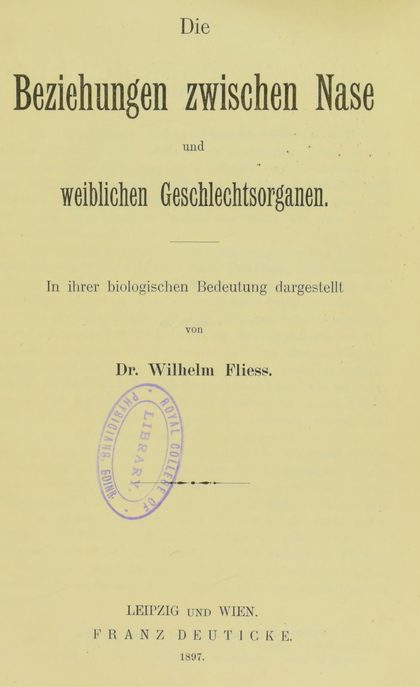
What Fliess counted were whole days and their multiples, set out as arithmetic; the one figure in his 1906 book is a stepped line, not a wave. Swoboda turned the periods into a psychology of the individual and gave them a starting point, the birth date. The third cycle has no author we can read. The smooth curves and the labels physical, emotional and intellectual arrived with the books of the 1960s, by which time the theory came as a ready-made daily chart.
The four cycles
Each cycle has its own page: its length, who proposed it, where its critical days fall, how the theory's writers and its critics saw it, and the claims made about it. Three are the classical cycles; the fourth arrived in 1978.
The three classical cycles
A later addition
Variants and what we leave out
Calculators and books disagree on several points. We describe the variants so you can recognise them, and say what we do.
- Swoboda's critical day. For Swoboda the critical day was the period day itself, once per cycle, and he advised against large undertakings on it, such as an examination or a big speech. Later books moved the critical day to the two midline crossings of a sine curve. We follow the later convention, which every modern tool uses.
- Which day a crossing belongs to. When a crossing falls in the middle of a day, tools disagree on the day it belongs to; our 2026 survey found three conventions. We take the day containing the crossing, as the devices of the 1970s did.
- The hour of birth. Some calculators count from the hour of birth. No primary source does: the theory as published counts whole days. We ignore the time.
- More cycles. Beyond the 38-day intuitive cycle, later books and apps add 43-day "aesthetic", 48-day "awareness" and 53-day "spiritual" cycles. We found no source for them older than the craze of the 1970s, and we do not show them.
- Combined curves. Some tools average the cycles into one "overall" curve or mark a "critical zone". No source of the theory does this, and our own old combined zone mostly marked days on which no cycle was critical. Left out.
- Fixed thresholds. Our old engine called a day critical when a curve was within 0.10 of the midline. That missed the physical cycle's halfway crossing and marked the intellectual one twice. It was replaced by the crossing rule.
- Colours. The red, blue, green and violet of popular charts are a convention of the charts, not part of the theory. Our chart tells the cycles apart by line style and name as well as colour, so that no colour carries a meaning.
- Advice by the cycles. The books from Thommen onwards, most web calculators and our own pages before October 2026 told readers what to do or avoid on given days. All of it is left out.
Myths and disputed claims
What is said about biorhythm, who says it, and what the record shows. The label is ours.
-
The cycles govern bodily condition, accidents, illness or the quality of decisions, so people should rest, take care or plan their days by them.
falseWho says it: Popular biorhythm books from Thommen (1964) on, most web calculators, and our own pages before October 2026.
What the record shows: The controlled studies, which a 1998 review of 134 of them sums up, did not bear it out.
-
A Japanese railway, an American airline and other firms halved their accidents by scheduling staff with biorhythm charts.
unverifiedWho says it: Gittelson's and later popular books, and many web pages.
What the record shows: No controlled data stand behind the figures: a 1978 thesis repeats them second-hand from a popular book, and a Toronto newspaper could not find the Japanese studies the promoters cited. That one Japanese railway used the charts is recorded in a practitioner report of 1969.
-
Alfred Teltscher, an engineering teacher at Innsbruck, found the 33-day cycle in the exam results of thousands of students in the 1920s.
unverifiedWho says it: Thommen and the popular books after him; most web histories.
What the record shows: No publication by him has been found. Thommen wrote in 1973 that his own search found none, and the first name, the post and the number of students vary between accounts.
-
The 28-day cycle is the Moon's month.
falseWho says it: Web pages, and our own page before October 2026.
What the record shows: A month from new moon to new moon is about 29.5 days. Fliess started from the menstrual cycle; in 1906 he gave the Moon's month as 29.5306 days and rejected it for his periods.
-
Swoboda found the same periods independently of Fliess.
falseWho says it: Popular histories, and our own page before October 2026.
What the record shows: Swoboda's book of 1904 builds openly on Fliess's of 1897. A 2003 study of their quarrel finds the charge of plagiarism out of place but confirms the dependence.
-
The four cycles realign only after more than two thousand years, and all three classical cycles are critical together about once a year.
falseWho says it: Our old page writer's source file and some web pages.
What the record shows: The four cycles repeat together after 403,788 days, about 1,105 years. The three classical cycles realign after 21,252 days and are critical together eight times in that span: about once every 7.3 years.
-
The cycles start at the first breath, when the newborn's own rhythm separates from the mother's.
unverifiedWho says it: Our old page writer's source file, citing a page that does not say it.
What the record shows: The theory counts from the date of birth. No source gives the cycles a physiological starting point.
-
Fliess drew the cycles as sine waves and named them physical and emotional.
falseWho says it: Most popular histories.
What the record shows: Fliess added whole multiples of 23 and 28 days and called the periods male and female; the one figure in his 1906 book is a stepped line. The curves and the labels are standard in the books of the 1960s and 1970s; who used them first has not been traced.
Stories and lore
These are told as the sources tell them.
Fliess and Freud. Fliess and Freud were close friends and correspondents in the 1890s. Fliess's periods belonged to a wider doctrine of his: that every person is bisexual for life, the 28-day period being the female side and the 23-day period the male, together with a "nasal reflex" theory that tied the nose to the rest of the body. The friendship ended in the years around the priority quarrel of 1906.
The craze. In the 1970s biorhythm was everywhere: Casio's Biolator sold for about $30, one New York chart service said it had sold 100,000 printouts in three years, and biorhythm machines stood in arcades and amusement halls. Sports, celebrity and airline anecdotes passed from book to book without a controlled source behind them.
The railway and the airline. Popular books say that a Japanese railway and an American airline cut their accidents by scheduling staff with the charts. That a Japanese railway tried the charts is recorded; the figures come second-hand from a popular book, and a Toronto newspaper that went looking for the Japanese studies could not find them.
The teacher nobody can find. The 33-day cycle is told as the discovery of an Innsbruck teacher called Teltscher, whose students' exam results are said to have shown it. His first name changes between "Alfred" and "Friedrich", Thommen wrote in 1973 that his own search abroad found no document, and a 1978 thesis says the study was believed destroyed in the war. One lead is open: an Austrian newspaper of 22 June 1930 that names him beside "Periodenlehre" has not yet been read.
Swoboda's lost papers. Thommen also wrote that Swoboda's own research was lost in 1945. His papers that survive are now in the Brenner-Archiv of the University of Innsbruck.
Evidence and criticism
The large review. In 1998 Terence Hines reviewed 134 studies of biorhythm, published and unpublished. The 35 that reported some support had errors of method or statistics that account for it; the other 99 found no support at all, and he concluded that the theory is not valid.
Accidents. In 1979 Hines summed up the accident studies, which covered more than 25,000 accidents. He also showed where the promoters' figure of "60 percent of accidents on critical days" comes from: critical days are about a fifth of all days, so with the day before and the day after counted in, about 60 percent of any random set of accidents falls near one by chance.
Sport, births and exams. In 1978 William Sims Bainbridge reported nine statistical studies: Arnold Palmer's 243 winning days, the wins of 31 women golfers and the first wins of 143 men, 95 no-hit baseball games, the deaths of 274 pitchers, 565 births, and the exam scores of two classes.
One firm's accidents. In a thesis of the same year, Richard Zimmerman examined 222 accidents at one Portland firm over a year against nine hypotheses.
Easy to test, and tested. Because the periods are fixed from birth, the theory makes definite predictions for any date, which is why it was tested so often.
Our own record. Until 12 October 2026 our engine texts and cycle pages gave advice by the cycles. They were rebuilt that day, and these pages replace the last of the old wording.
Terms
- Biorhythm
- The generic name of the theory, one word, used here descriptively. A few compound names containing the word are registered as trade marks for other goods and services; we use only the plain word.
- Biorhythmik
- The German coinage of the Swiss and German writers of the 1930s, in print by 1937.
- Cycle
- One of the theory's waves of fixed length, counted from the birth day: 23, 28 and 33 days for the classical three, 38 for the intuitive cycle.
- Cycle day
- Where a day falls within a cycle, counted from 1. The birth day is day 1 of every cycle.
- Critical day
- Swoboda's term (1904). In our use, and that of the 1970s calculators, the day containing a midline crossing: cycle day 1 and the halfway day (12, 15, 17 or 20). A neutral turning point of the curve, never a warning.
- Double and triple critical days
- Days on which two, or all three, classical cycles are critical: about five a year, and about once every 7.3 years.
- The five states
- High and rising, high and falling, low and falling, low and rising, and critical. We do not use other labels for the curve's positions.
- Male and female periods
- Fliess's names for the 23-day and 28-day series. He used no other labels for them.
- Sensitivity
- Another name for the 28-day cycle, used in Casio's patent and in a 1978 study of accidents.
- Intuitive cycle
- A 38-day cycle first found in Mort Gale's book of 1978, a later addition to the theory. Off by default on our chart and labelled as later.
- Compatibility
- In biorhythm books, how far apart two people's cycles run: 100% in step, 0% opposite. It never changes over a lifetime, and we do not read it as a judgement of a relationship.